
|
|
|
                                   
|
Australian safety requirements 2003
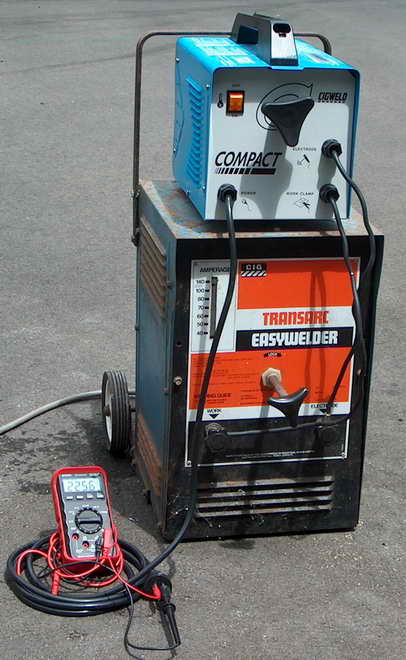
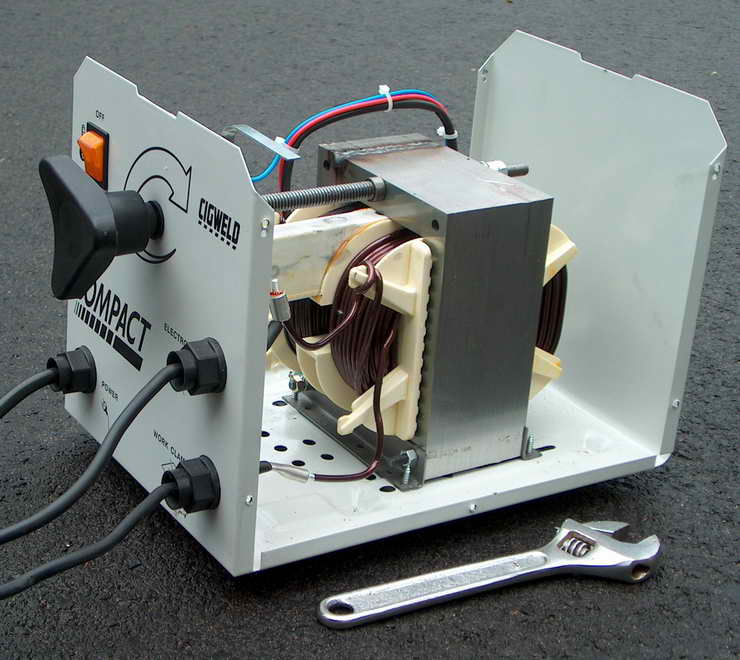
My two arc welders showing 225 V output. The internal view of the smaller (110 A) welder showing the adjustable shunt giving variable current limiting.
Measurements
Measuring
0.001 grams 2005
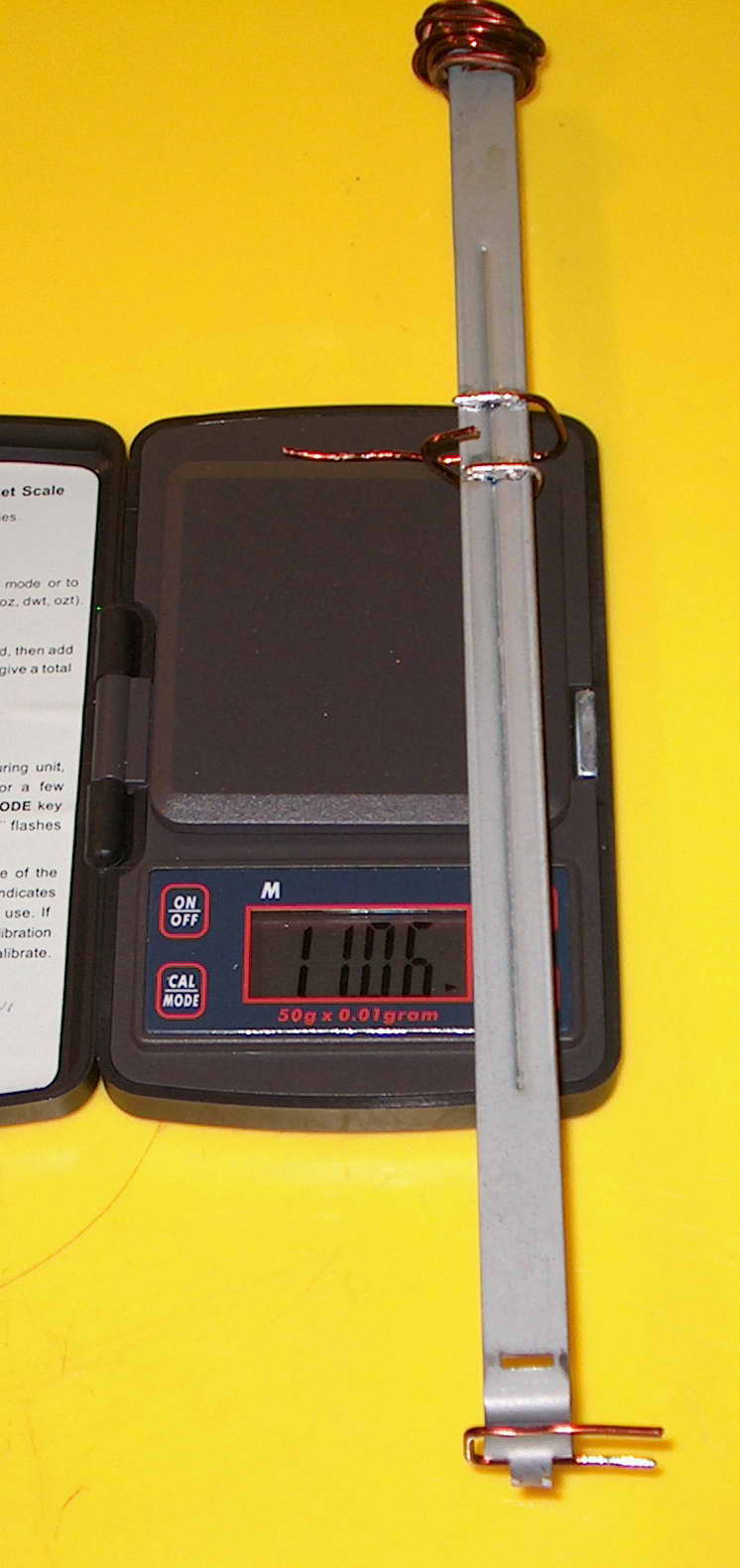
Picture shows wire weighing 1.01 g on balance reading 11.06 g (which divided by 10 gives 1.106 g). Only 10% error and reads to 0.001 g. The drop of water from a 29 G needle weighs 5 mg +/-1 mg on these scales. The drop size average dimension is 2.04 mm = 1.02 mm radius. Using the formula 4/3 pi r^3 for volume of a sphere gives 4.4 mm^3 = 4.4 mg which is close enough to the measured 5mg. If you look closely beneath the hanging drop you can see the streak from the drop where it fell during the shot. The streak goes towards the axis of the needle as the drop slides off the bevel but remains in contact with the tip. Hence this shows a full size drop, not a partly filled one which is why this picture was chosen to do measurements on. For discussion of this topic on the 4HV forum click here.
My Cameras
2002, 2005, 2009 Here are my previous cameras:
Shown above from around 2003 is a HP 812 4 mega pixel digital camera with tripod for estimated 10 second exposures from what my wife regards as a safe distance. (There is not inconsiderable risk to electronic devices and some of the close up photos were taken with the camera wrapped in aluminium foil). MPEG video on website also taken with same camera. It can even take a picture of itself! (in a mirror on auto timer in a green room). I have a custom made tinplate box which can cover this camera or my Nikon 501 or Sony digital video camera which allows them to be used more safely with a tripod closed to the action.
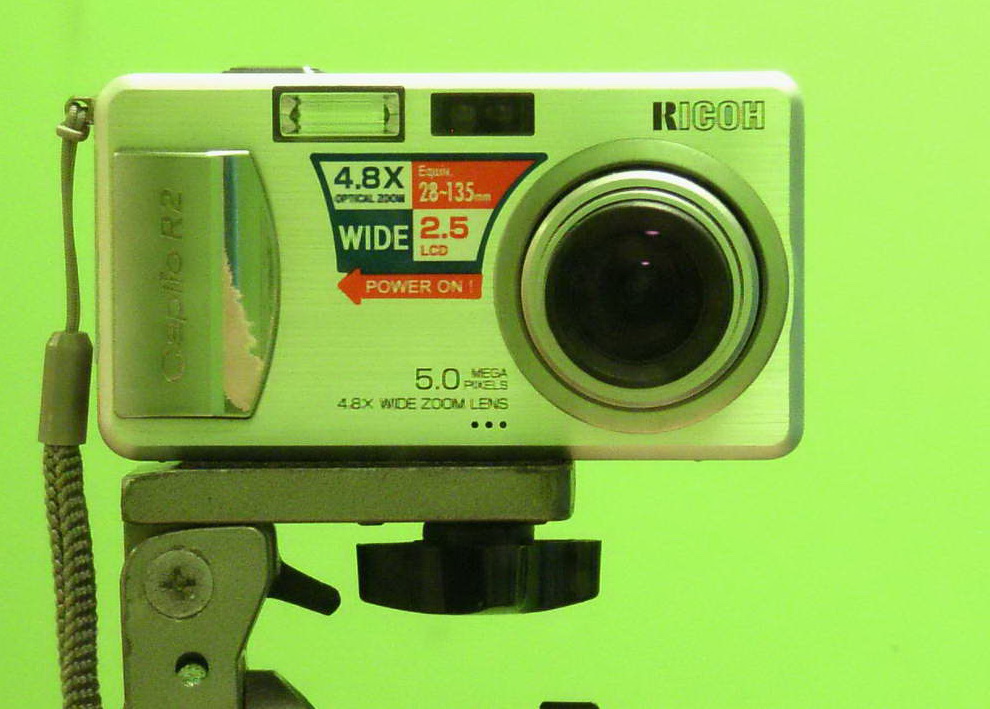
After June 2005 I have used this Ricoh Caprilo 5MP camera. It is much better from many points of view including macros focusing down to 1 cm from the lens. I didn't get to use it for long.
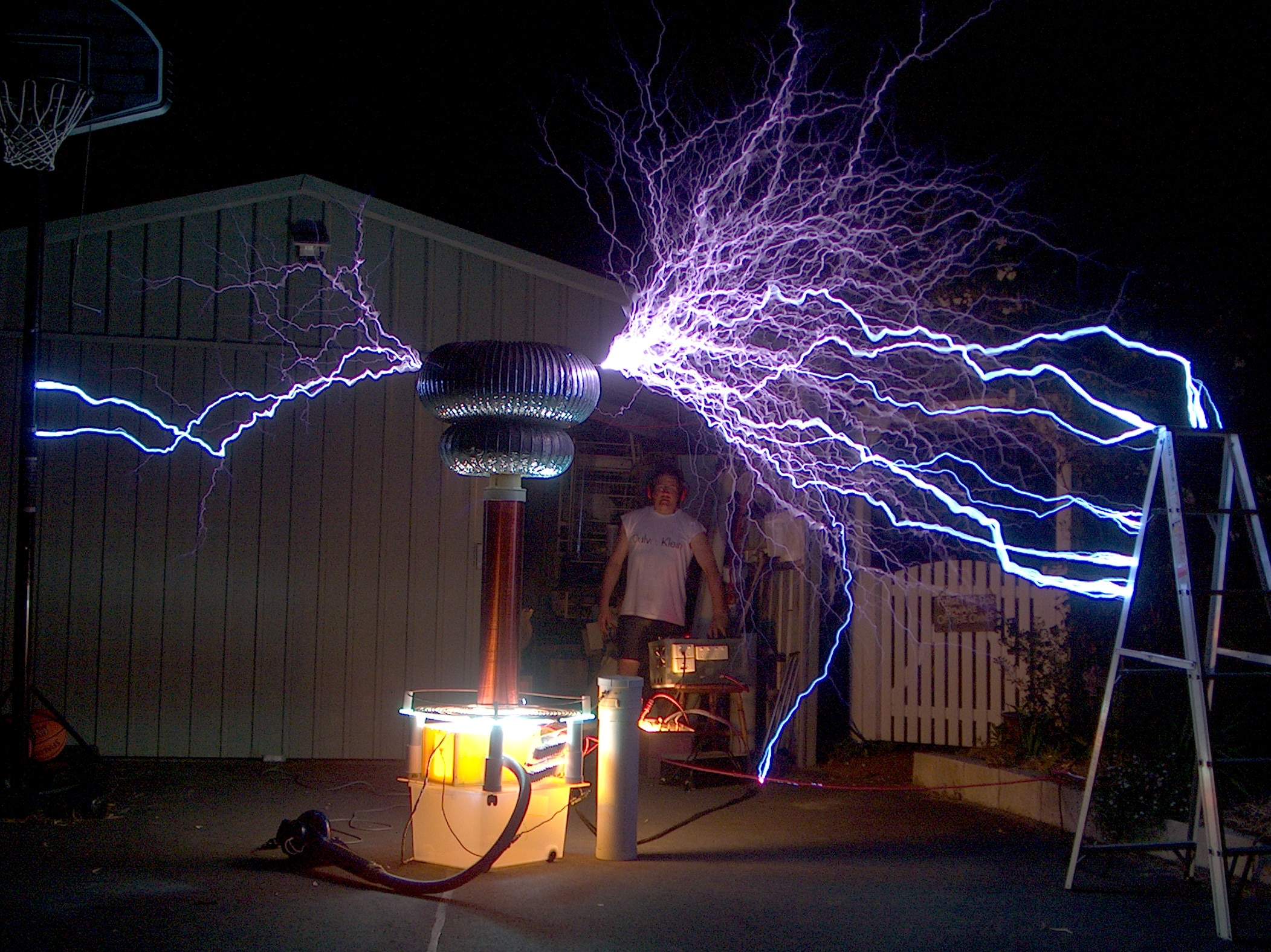
This is my Nikon D70s 6 MP camera won as a prize in August 2005 in our local paper photo competition (Sunday Times circ 365,000). Camera was valued at AUD$2000 with lens. The competition had 5000 entries in 2 categories with 40 photos published in each and I won one of them. The photo I entered was the Tesla coil with 7 foot sparks. The camera has a bit of a learning curve but has much better low light capability (to ISO 1600). I have accessories including a tripod (essential), normal and long distance IR remote controls and lenses including a Sigma 180 mm that does 1:1 macros (from 40cm) and telephotos. I have a wide angle lens and a UV filter. I take over 5000 photos per year of which very few make it to my site. Many are simple happy snaps without much thought and some have taken 100 hours to develop and compose (like Red Alert Tesla). Sadly, in November 2008 it died after 18,000 shots. Probably not due to electrical interference as it wasn't shooting sparks at the time. A fabulous performance.
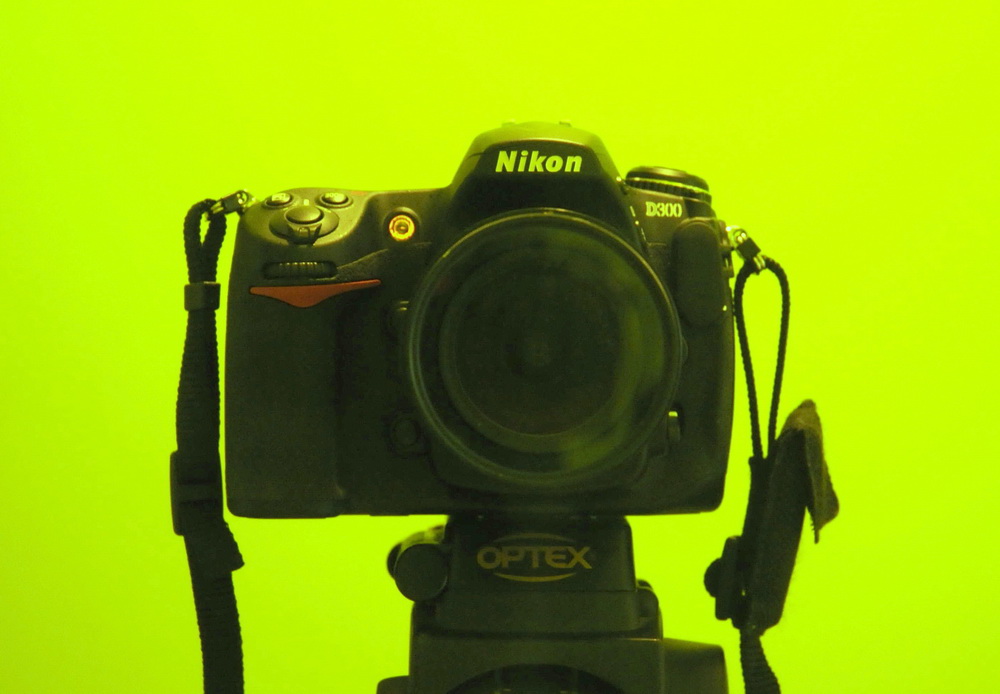
The Nikon D300 2009. A 12 MP camera (above) replaced my D70S. Cost was AUD$2200 with 4 Gig fast Compact Flash card for the body alone (no lenses) which will store from 75 to 7000 pictures depending on the resolution. The decision to use this camera was reached for better low light performance (ISO to 6400) as well as better resolution (12 MP). Use is still familiar but with lots of new features which I have yet to fully explore but setting the autofocus point is a lot simpler and there is a live view option. Unfortunately the remote control is not built in, but the lenses I was able to use from the previous Nikon. I didn't have the hang of the white balance in the shot above. Accessories include a RF remote, and RF flash remote. I have a variety of filters including a new variable neutral density filter from 2-400, rainbow, star, UV and IR filters. I have a kit as yet not completed, to give programmed delays and triggering for the flash.
Photos I have a list of criteria that I use for digital cameras
Glossary (If you can't find it below, try here) ARSG Asynchronous rotary spark gap. This switches the capacitors charge into the coil rapidly and frequently but not in synchrony with the mains 50 Hz. In my case the rotary disc is driven by an angle grinder motor. See SRSG. Ballast is a method of limiting otherwise excessive current draw from the mains particularly when using large transformers 'pole pigs'. Typically inductors (large coils) are used but in other situations, resistors or capacitors can be used. Capacitor stores electrical charge and allows alternating current to pass. In its simplest form it has 2 conductive plates separated by an insulator. The main capacitor in a Tesla coil is the tank capacitor. This can be homemade (in my case with aluminium foil and polyethylene sheet) or by multiple mini capacitors (MMC). Other capacitors are used to filter voltage spikes or as power factor correction. The value is typically measured in microfarads (uF), nanofarads (nF) or picofarads (pF). The other main capacitor is the toroid although it might not look like one. MMC multiple mini capacitors. In my case using 30 (or 60) polypropylene capacitors rated at 0.33 uF at 1600 VDC to obtain a total value of 0.044 uF (or 0.088 uF) at 24 kVDC. With this particular series of Cornel Dubilier capacitors it has been found that this DC rating can reasonably be used as the AC rating with Tesla coil use. MOT Microwave oven transformer typically rated at 250 VAC in and 2000 VAC out at perhaps up to 1000 W. Four of these are used in my supply. MOV (metal oxide varistors) used to protect circuits from transients, such as across the mains to protect spikes of voltage above mains voltage. NST Neon sign transformer. Typical rating 250 VAC in and 12 kV AC out at 30 mA. Power factor correction capacitors are capacitors across the mains which improve the phase angle of currrent versus voltage and will reduce the apparent current draw of a transformer. Typically 30 uF for an NST. RCD's (residual current devices) are a safety device on the mains that switch off power if more than typically 30 mA is leaked to earth to prevent electric shock. RQ (Richard Quick) static gap is a stationary spark gap for smaller Tesla coils using a number of short lengths of copper pipe nearly touching so that there are multiple small sparks in series. Originally designed by the TCBOA (?) I think. SCR (silicon controlled rectifier) Is an electronic switching device in some respects like a large transistor. They can switch large amounts of power . SRSG Synchronous rotary spark gap. This switches the capacitors charge into the coil rapidly and frequently in synchrony with the mains 50 Hz. In my 18 inch coil this will be from a modified motor running at 3000 RPM. See ARSG. Sparks What Tesla coils are all about. Lightning like high voltage discharge through air to another object. Streamers Sparks that leave the toroid and branch off in to the air without reaching another object. TC Really, you should work this one out for yourself. Variac A variable 'autotransformer' used in the mains circuit used to vary the mains voltage (110 in USA, 250 in Aust) from 0 to full mains voltage up to about 110 % i.e. 120 V / 270 V.
Formulae A selection of formulae that I have had to use: Ohms Law v (Volts) = i (current in Amps) * r (resistance in Ohms) Power P (Watts) = v (Volts) * i (current in Amps) Power P (Watts) = 1/2 C (capacitance in Farads) * v (volts) Impedance Z (Ohms) = 2 * pi * F (freq in Hertz) * L (inductance in Henries)
Resonant frequency
Secondary Voltage
Vsec = Vprimary * sqrt [
L sec / L primary]
For static gaps, LTR (larger than resonant) operation is recommended with
Cp=1.6 * Cres.
Power factor correction Vs_oc/Is_ss*10^6) / (2*pi*F*Vin^2) B (Tesla) = Force (Newtons) / [ i (current amps) x length (meters) ] Wire gauge details, MMC details and other formulae here
Safety More comprehensive and interesting safety information is here
Poetry 2009
Humour (?)
2
A short
cartoon (1.3 Mb MP3)- must see : ) Higher quality
version here (1.3Mb WMV)
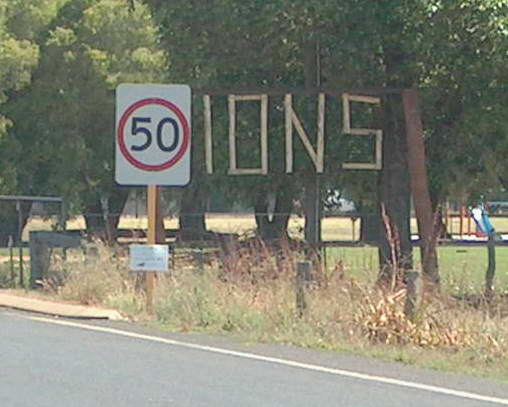
3 A sign on the outskirts of a nearby town. Many of my projects result in IONS - sparks, lasers etc. LIONS are a local service organization but have lost part of their "L". I am probably the only person in the world that finds this even faintly amusing.
4 This quote from a renowned Tesla
coiler: 5 A patient of mine who has a poorly controlled psychiatric disorder was heard to say to someone else in the waiting room (about me). "He's really rather weird .. " A fine commendation from a well qualified source.
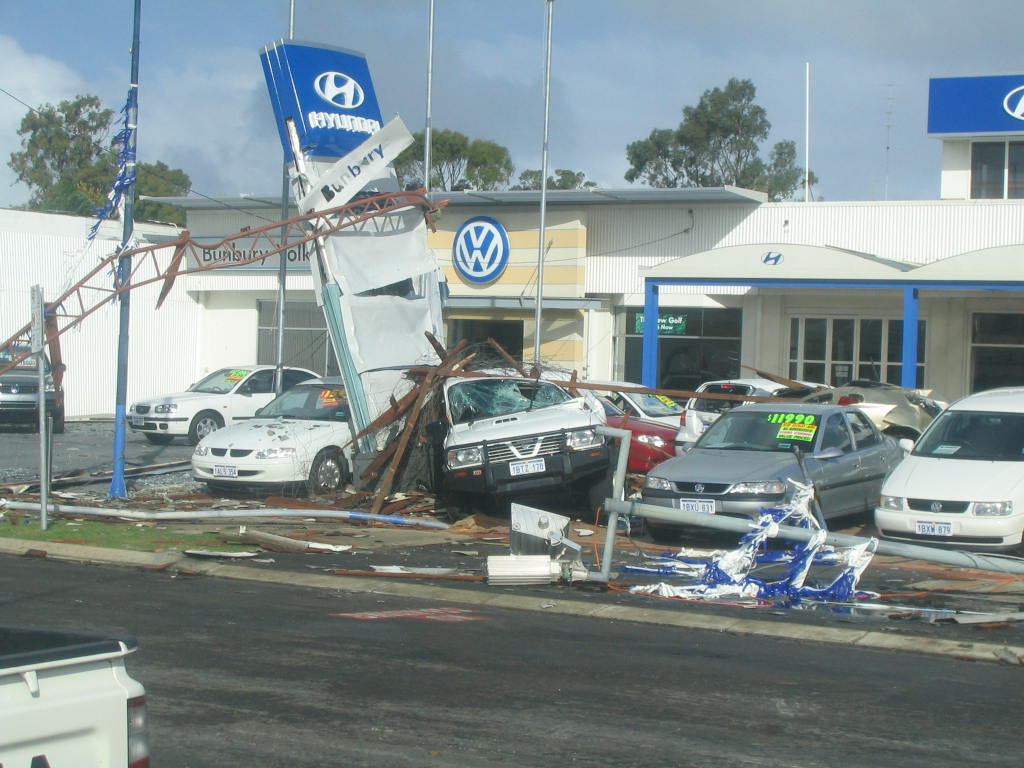
Tornados
2005
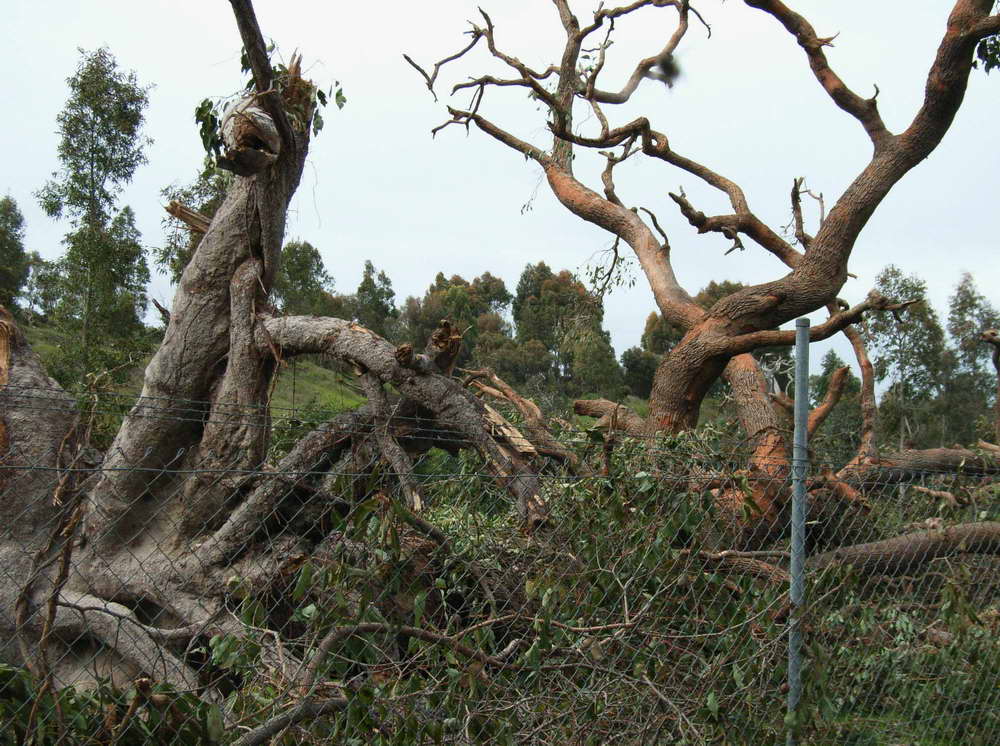
The tornado that knocked this and a number of other trees down was much more localised, perhaps 300 x 100 m but was only 500 m away from our home. The appearance of large branches stripped of leaves was typical of the previous tornado as well.
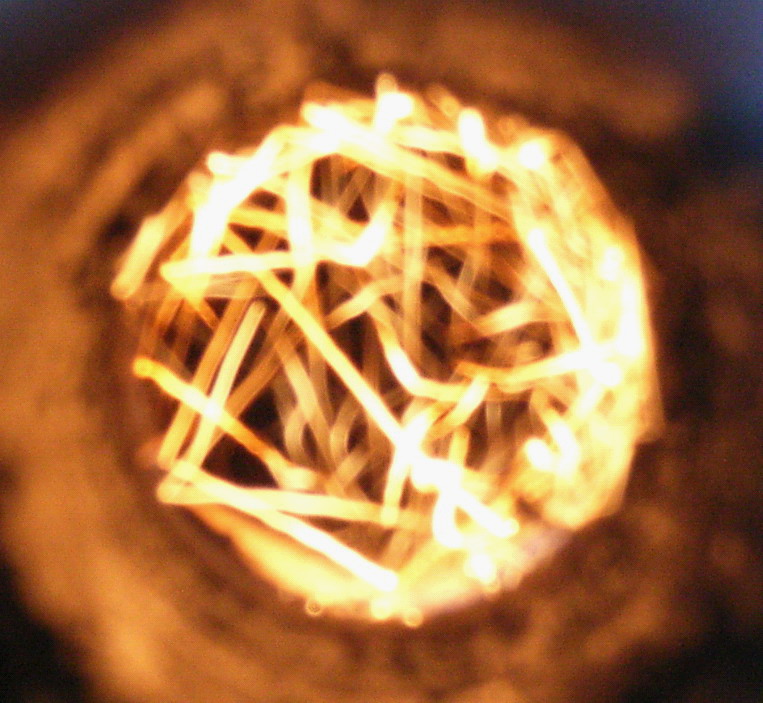
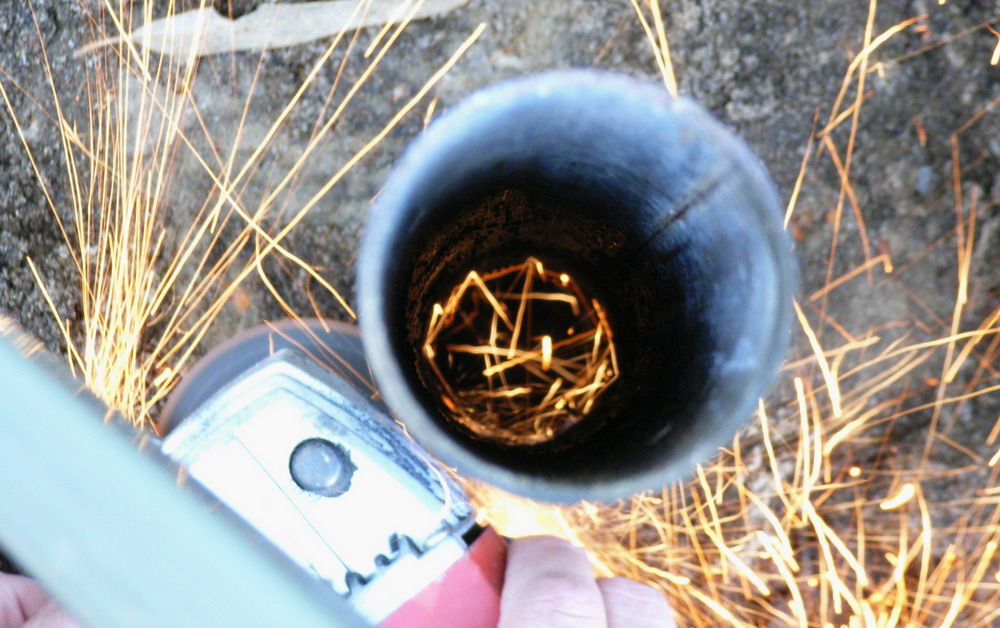
The left and center photo's are of me using an angle grinder to
remove an old basketball net support so I can fit a 20 ft shipping container
in that place. This is to provide extra storage space. My shed interior was
so full it was becoming a becoming an independent gravitational object
sucking up HV related matter from around the world. It also seemed to be
getting darker and was harder to get away from. I suspect some strange
effect on light of intense gravity. The right photo shows the sparks from grinding the tungsten
rod. Note the absence of sparkles as with iron. |
|||||||||||||||||||||||||||||||||||||||||||||||
This page was last updated January 26, 2011